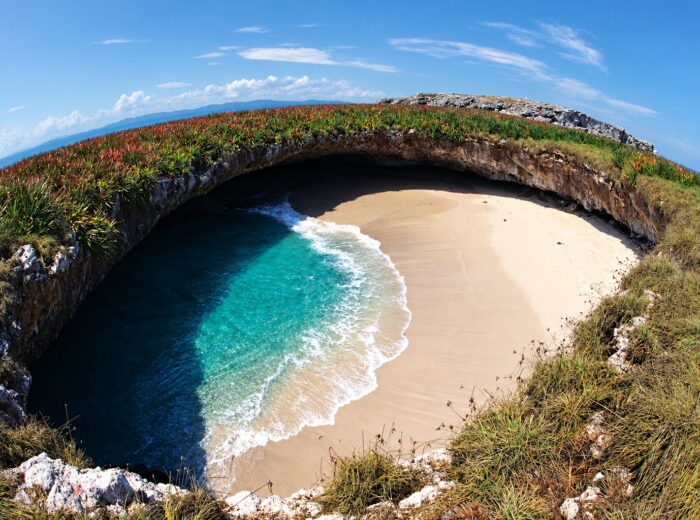
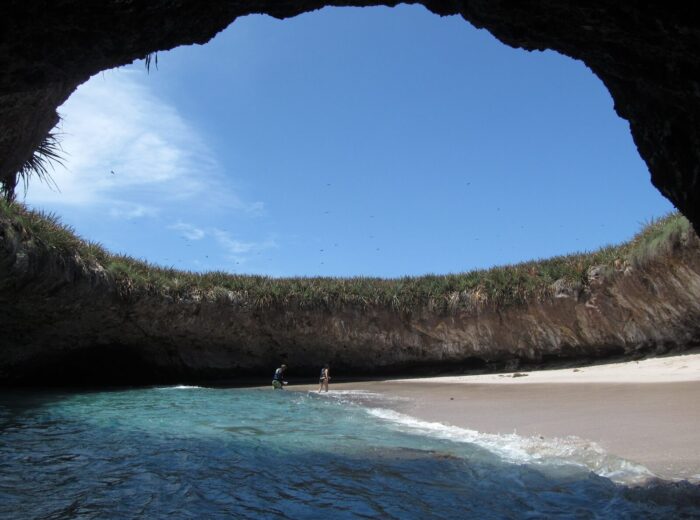
These Nayarit travel tips are written for your first trip: what to know before you go about money, safety, getting around, the state’s two time zones, health, seasons, packing, tipping, phone signal and respect for Indigenous communities. Nayarit, the Mexican state just north of Puerto Vallarta, is friendly and easy to travel, but a little preparation saves you time, money and surprises.
This is not a list of places (see things to do in Nayarit for that) or a budget breakdown: detailed costs are in how much a trip to Nayarit costs, and flights, buses and driving routes in how to get to Nayarit. Here we gather the practical advice people tend to forget, updated for 2026.
Nayarit travel tips at a glance
| Topic | Key tip | Why it matters |
|---|---|---|
| Airport | PVR for the Riviera Nayarit; TPQ (Tepic) for San Blas, the capital and the interior | The wrong choice adds 2–3 hours of driving |
| Time | Bahía de Banderas runs on UTC-6; the rest of the state on UTC-7 | Tours, flights and check-ins can end up an hour off |
| Money | Pay in pesos and carry cash for boats, stalls and buses | Dollars are accepted at poor exchange rates |
| Season | Dry from November to May; rains from mid-June to mid-October | Prices, weather, sea conditions and activities all change |
| Health | Bottled water, insect repellent and reef-safe sunscreen | Dengue appears in the rainy season; sand flies on the north coast |
| Culture | Ask before photographing people and ceremonies | In Wixárika and Náayeri communities it is a rule, not a courtesy |
When to go: seasons and what changes
- High season (December to April): dry, sunny days, calm seas and humpback whales from December to March (the official 2025-2026 season ran from December 8 to March 23). Hotels charge 30–50% more; Christmas, New Year and Holy Week (Semana Santa) book up months ahead.
- Shoulder season (November and May): the best balance of price and weather. November is almost rain-free; May is the hottest, driest month.
- Low season (June to October): rates 20–40% lower, green landscapes, full waterfalls and sea turtle releases from July to November. The trade-off is humid heat, afternoon downpours and the Pacific hurricane season (May 15 to November 30, with the highest risk in September and October).
Monthly temperatures, rainfall and rainy days from Mexico’s National Weather Service are in Nayarit weather month by month; if you haven’t picked dates yet, read the best time to visit Nayarit.
Getting around without wasting the day
- Pick the right airport. For Nuevo Vallarta, Bucerías, Punta de Mita, Sayulita and San Pancho, fly into Puerto Vallarta (PVR), 20–60 minutes away. For Tepic, San Blas, Santa María del Oro or the inland Pueblos Mágicos (Mexico’s official “Magical Towns”), Tepic (TPQ) or Guadalajara works better.
- The Compostela bus is your friend on the coast. The green-and-white buses run every 15–30 minutes from 6:00 to 22:00 and stop in every town along Highway 200, for approx. $25–70 MXN per leg in 2026. Cash only, with little room for big suitcases.
- Uber works in Bahía de Banderas, but not on the way back. You can ride to Sayulita or Punta Mita, but getting one back is hard. Tepic has Uber and DiDi; San Blas and Guayabitos only have local taxis, so agree on the fare before getting in.
- Rent a car if you’ll mix coast and interior. Budget approx. $600–1,200 MXN (35–70 USD) a day with basic insurance; “$10 a day” deals exclude the mandatory coverage and require a credit card deposit.
- Drive in daylight away from the coast. Mountain and village roads have curves, unpainted speed bumps (topes) and loose cattle. Allow generous times and don’t rely on your GPS alone.
- Carry cash for tolls and for gas in small towns, in case the card terminal is down.
If you’re heading straight to the state’s best-known beach town, we have a dedicated guide on how to get to Sayulita.
Two time zones: the detail that confuses everyone
Nayarit has two clocks. The municipality of Bahía de Banderas (Nuevo Nayarit, Bucerías, La Cruz de Huanacaxtle, Punta de Mita, Sayulita, San Pancho and Lo de Marcos) uses Central time, UTC-6, the same as Puerto Vallarta and Guadalajara. The rest of the state, including Tepic, Compostela, Rincón de Guayabitos, Chacala and San Blas, uses Pacific time, UTC-7. Mexico dropped daylight saving time in 2022, so the gap is one hour all year.
- Driving from Lo de Marcos to Guayabitos you “gain” an hour; on the way back you lose it. Double-check check-in times and your flight.
- If you stay in Tepic and fly out of Puerto Vallarta, your ticket is in Central time.
- When booking a whale or Marietas tour, confirm which time zone the meeting time is in, especially if you’re coming from Guayabitos.
- Your phone usually adjusts, but near the boundary it can latch onto the wrong tower: trust your hotel’s clock.
Money, payments and tipping
- Pay in pesos. Dollars are accepted in the Riviera Nayarit, but at an unfavorable rate.
- Cards work, but not everywhere. Hotels, gas stations and most restaurants in Sayulita, Bucerías and Nuevo Nayarit take cards. Stalls, markets, buses, boat operators, cooperatives and many beach seafood shacks are cash only.
- Use bank ATMs in Puerto Vallarta, Bucerías, Tepic or Compostela. In Sayulita, machines run out of cash on weekends and non-bank ATMs charge steep fees.
- Decline “conversion to your currency” at card terminals and ATMs: paying in pesos is always cheaper.
- Carry small bills ($50, $100, $200 MXN) for boats, tips and small eateries; change for a $500 bill isn’t always available in a village.
How much to tip
In 2026 the norm is 10–15% at sit-down restaurants, $20–50 MXN to whoever carries your bags or helps you on a boat, and $100–200 MXN per group for the guide on a day tour. Check the bill at tourist restaurants: some already include service.
Safety: sensible precautions
The tourist areas (Riviera Nayarit, San Blas, Tepic and the Pueblos Mágicos) welcome visitors year-round with the usual precautions: don’t flash valuables, use taxi stands or ride apps, don’t leave belongings alone on the beach and avoid secondary roads at night. Check your government’s official travel advisories before and during your trip.
- At the beach, respect the flags. San Pancho, parts of Sayulita and the open beaches farther north have rip currents. For swimming with kids, Guayabitos, Bucerías, Nuevo Nayarit and Chacala are the calmest bays.
- Book licensed operators: Islas Marietas and whale-watching tours need permits from CONANP (Mexico’s protected-areas agency) or SEMARNAT, and the operator should be able to show them.
- Emergencies: dial 911 anywhere in Mexico. Also save your hotel’s and insurer’s numbers.
Health: water, mosquitoes and sun
- Don’t drink tap water. Use bottled or filtered water; hotels and restaurants use it for ice too.
- Always use repellent. Nayarit reports dengue cases every year, mostly in the rainy season. Use DEET or icaridin at dawn and dusk. In San Blas and Mexcaltitán, sand flies (jejenes) bite hard at those hours.
- Reef-safe sunscreen. It’s mandatory in the Islas Marietas and protects reefs all along the coast. A long-sleeve UV shirt reduces how much you need.
- Stay hydrated: coastal highs top 30 °C (86 °F) most of the year, and summer humidity is deceptive.
- Travel insurance: recommended, and with weather coverage if you travel from June to October.
What to pack for Nayarit
- Light cotton or linen clothes, swimsuit, hat and sunglasses.
- Sandals plus sneakers or water shoes for trails, waterfalls and canyons.
- A light jacket for Tepic, Jala or the mountains from December to February: Tepic’s early mornings drop to 11–12 °C (52–54 °F).
- A compact rain jacket or umbrella from June to October.
- Reef-safe sunscreen, repellent, a refillable bottle and a dry bag for boat trips.
- A digital copy of your passport and your Mexican immigration record.
Connectivity: phone, internet and power
Hotels, cafés and restaurants in the Riviera Nayarit, Tepic and San Blas have Wi-Fi. A Mexican SIM or eSIM is usually cheaper than roaming. In the mountains (Del Nayar, La Yesca) and on rural roads, signal disappears for long stretches: download offline maps before you go and tell someone your route. Mexico uses 127 V power with two flat-pin plugs, the same as the US and Canada.
Cultural respect and good practices
- Indigenous communities: in Wixárika (Huichol) and Náayeri (Cora) territory, such as Del Nayar, ask before photographing people, homes or ceremonies, and accept a “no”. During the Cora Holy Week in Jesús María, photos are usually forbidden.
- Buy crafts directly from artisans: Wixárika yarn paintings and beadwork are sold in Tepic, Sayulita and San Blas, and buying direct means the money reaches the community.
- Nature: don’t touch or feed wildlife, don’t take shells or coral, and at turtle releases follow the camp’s instructions.
Only have two days? See our Nayarit weekend routes; traveling with children, read Nayarit with kids.
What you have to taste
Pescado zarandeado (butterflied fish grilled over coals), shrimp tamales, tlaxtihuil (a shrimp-and-masa stew), aguachile, pollo a la plaza in Ixtlán del Río, fried fish bites (chicharrón de pescado) at Santa María del Oro, tejuino (a fermented corn drink) and mango cajeta. The full list, with where to try each dish, is in our guide to Nayarit food. For quick answers to specific questions, see the Nayarit travel FAQ.
Frequently asked questions
What should I know before traveling to Nayarit?
There are two useful airports (Puerto Vallarta for the Riviera Nayarit, Tepic for the interior), two time zones, a rainy season from June to October, and many beach and transport services only take cash in pesos.
What time zone is Nayarit in?
Bahía de Banderas (Nuevo Nayarit, Bucerías, Punta de Mita, Sayulita, San Pancho) uses UTC-6, like Puerto Vallarta. The rest of the state, including Tepic, Guayabitos and San Blas, uses UTC-7. There is no daylight saving time.
Is Nayarit safe for tourists?
The tourist areas receive visitors year-round with normal precautions: don’t flash valuables, use taxi stands or apps and avoid secondary roads at night. Check your government’s official travel advisories before you go.
Do I need cash in Nayarit?
Yes. Buses, boats, stalls, markets and many beach seafood shacks only take cash. Withdraw pesos from bank ATMs in Vallarta, Bucerías, Tepic or Compostela and carry small bills.
How much should I tip in Nayarit?
10–15% at restaurants, $20–50 MXN to whoever carries bags or helps on a boat, and $100–200 MXN per group for the guide on a day tour (2026 ranges).
Can I drink the tap water in Nayarit?
No. Drink bottled or filtered water, which hotels and restaurants also use for ice. Many shops refill reusable bottles or sell 20-liter jugs.
Area map
- 1Puerto Vallarta International Airport (PVR) Gateway to the Riviera Nayarit; runs on Central time (UTC-6).20.68132, -105.24962 · Open in Google Maps
- 2Tepic International Airport (TPQ) For Tepic, San Blas and the interior; Pacific time (UTC-7).21.41733, -104.83988 · Open in Google Maps
- 3Tepic bus station First-class buses to Guadalajara, Mazatlán and the coast.21.49829, -104.88683 · Open in Google Maps
- 4Bucerías Bahía de Banderas: Central time (UTC-6), same as Puerto Vallarta.20.75559, -105.33435 · Open in Google Maps
- 5Rincón de Guayabitos Compostela: Pacific time (UTC-7), one hour behind Bahía de Banderas.21.02585, -105.26489 · Open in Google Maps