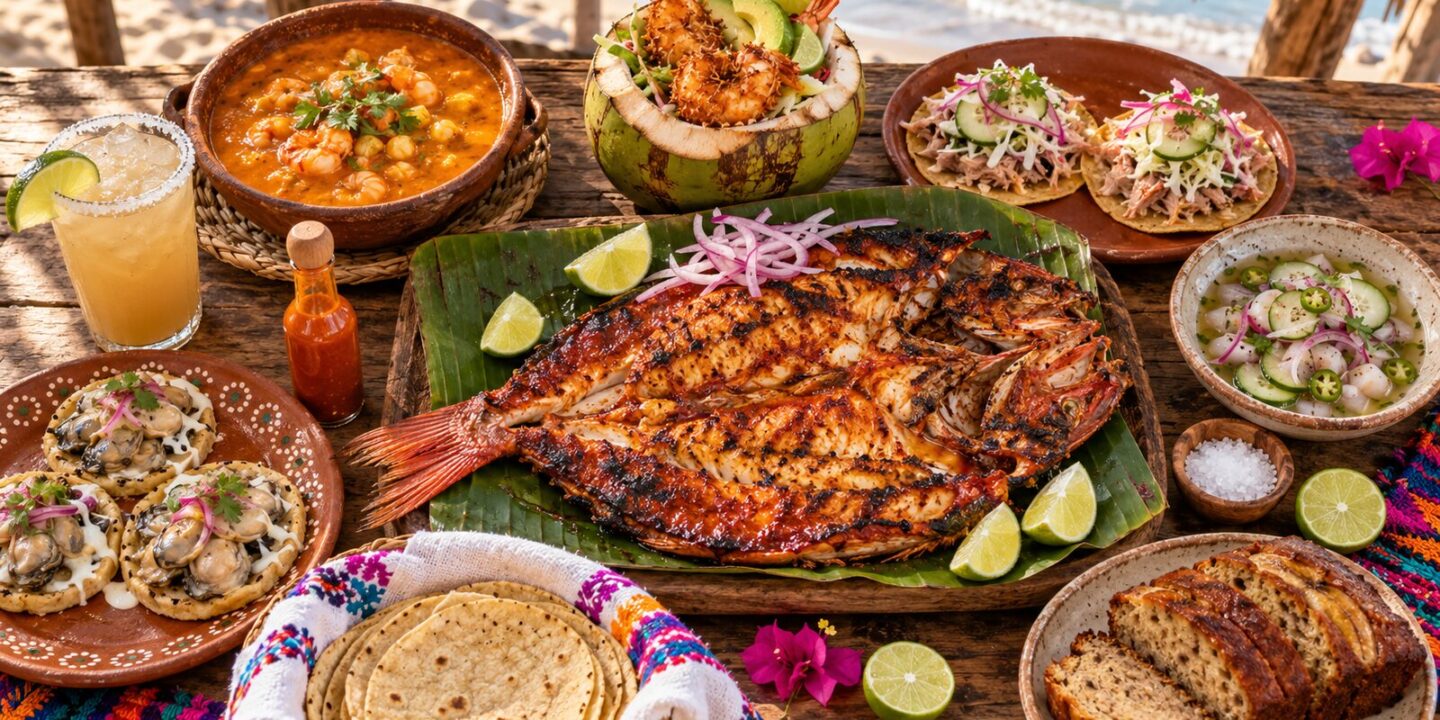
Nayarit food comes from three pantries: the Pacific and its estuaries (shrimp, fish, oysters), the corn of the valleys and the sierra, and the sugarcane and coconut of the coast. If you want the short answer to “what is Nayarit food?”, here it is: pescado zarandeado (butterflied fish grilled over coals), tlaxtihuil (a thick shrimp-and-corn broth), shrimp tamales and shrimp meatballs, pollo a la plaza, shrimp pozole, fish chicharrón, tostadas, blue-corn sopes and tejuino. Those are the 10 Nayarit dishes that show up on every serious list.
This guide goes further: first the 10 essential dishes, then 10 more (including drinks and desserts), a table by region with the kind of place to try each one and approximate 2026 prices, the typical food of Tepic, where pescado zarandeado comes from, and what “Nayarit style” means when you read it on a restaurant sign in the United States. If you would rather browse first, our Cuisine of Nayarit page gathers everything we have published about the state’s cooking.
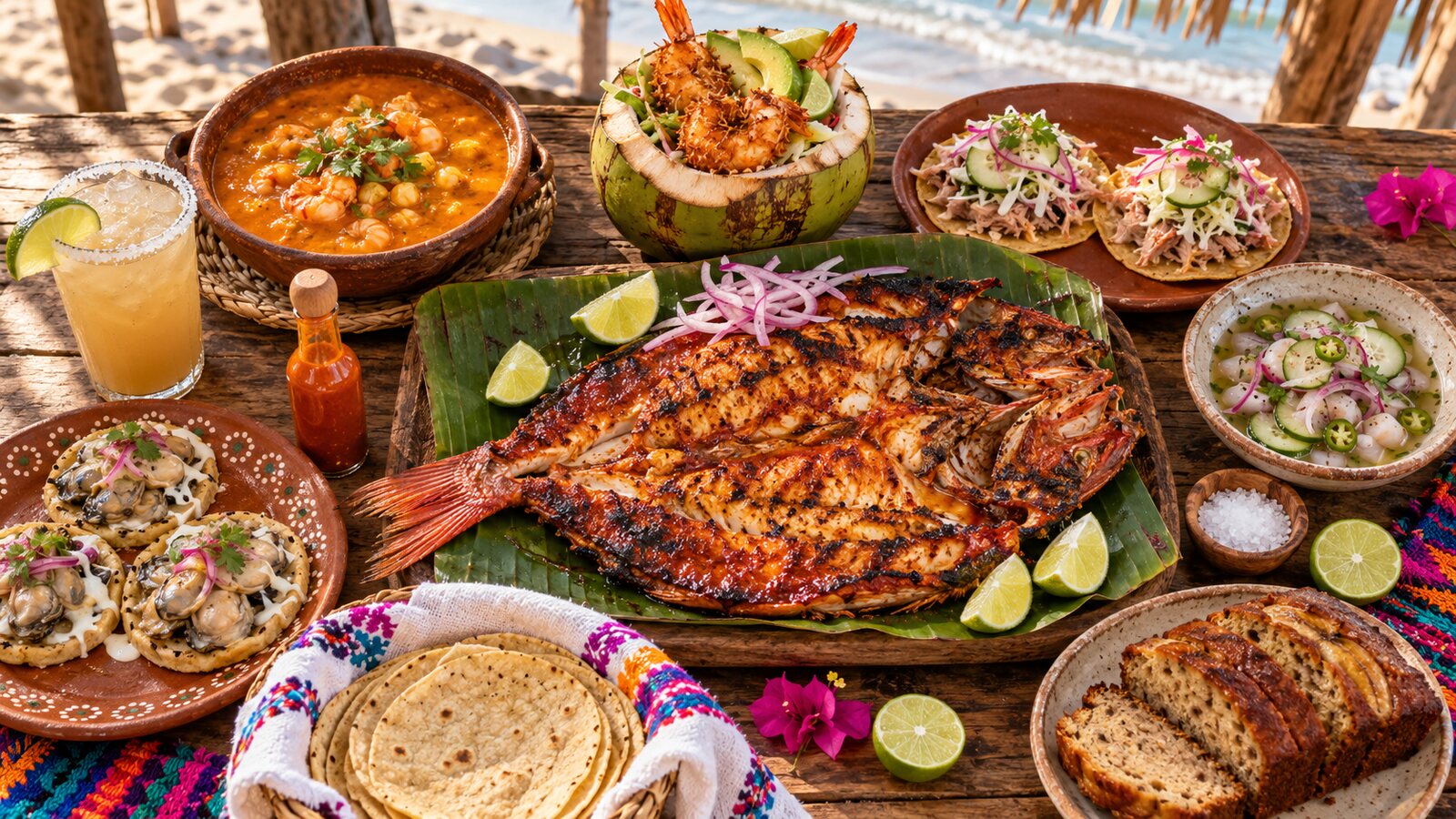
Nayarit food: the 10 traditional dishes you must try
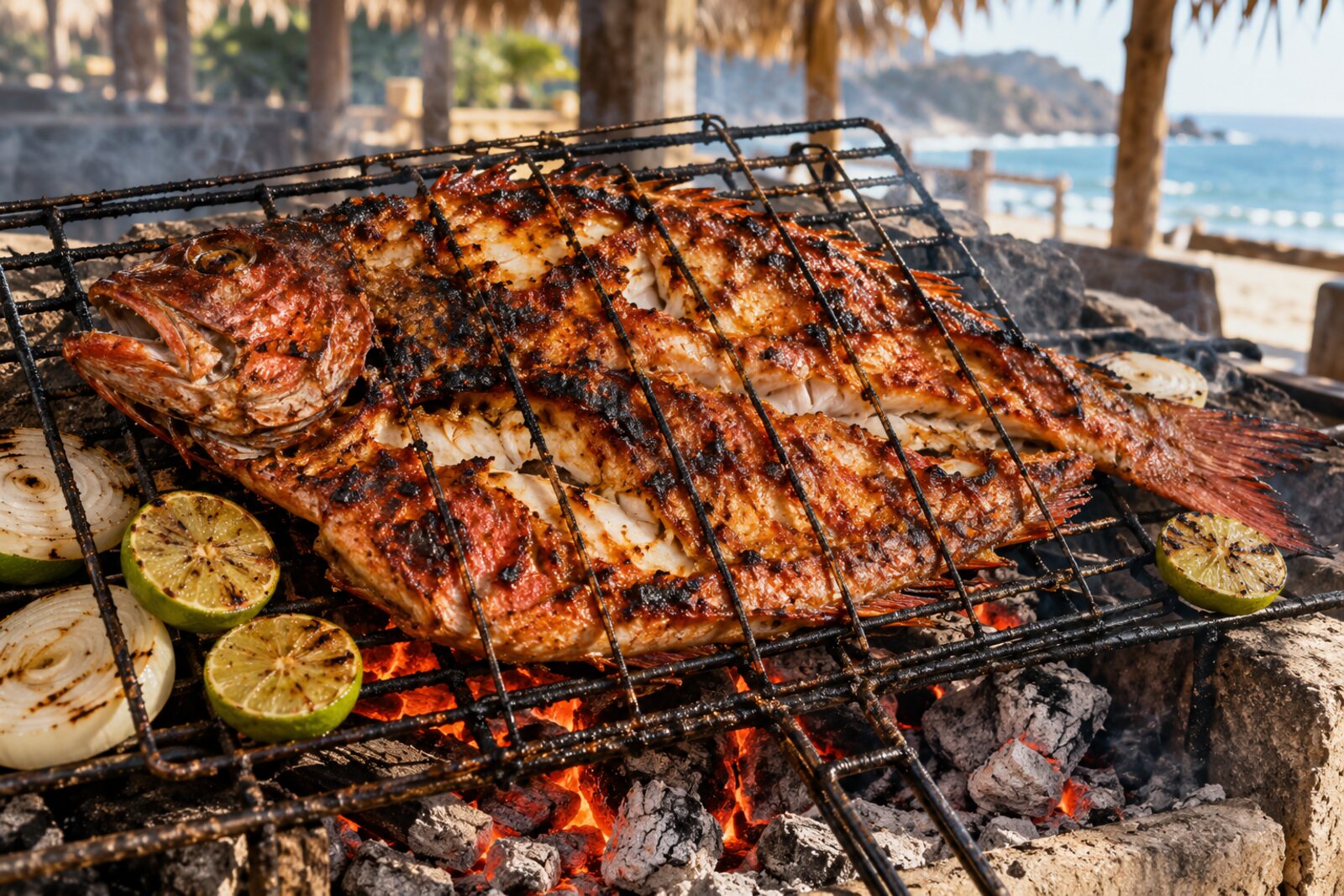
- Pescado zarandeado. Snapper, snook or red snapper butterflied open, rubbed with a mix of chile, garlic, soy sauce, lime and mayonnaise, then grilled inside a zaranda (a hinged wire basket) over wood or charcoal embers. It is the state’s signature dish and the reason Nayarit appears in world seafood rankings; read why in pescado zarandeado among the world’s top 10 seafood dishes.
- Tlaxtihuil (also spelled taxtihuil). A thick broth of corn masa, chile and shrimp, native to the island of Mexcaltitán. Probably the oldest and most purely Nayarit dish of all: think of it as a savory shrimp atole.
- Shrimp tamales. Corn masa with dried shrimp and chile, wrapped in corn husk or papatla leaf. A northern specialty (Santiago Ixcuintla, Tuxpan, Tecuala), eaten on their own or in broth.
- Shrimp meatballs (albóndigas de camarón). Balls of ground shrimp and masa simmered in a red broth. A staple of the lunch counters of Santiago Ixcuintla and Tuxpan.
- Pollo a la plaza (Ixtlán-style chicken). Boiled then browned chicken served with potatoes, carrots, lettuce, aged cheese and a slightly sweet sauce. Sold at night on the main squares of Ixtlán del Río, Ahuacatlán and Jala.
- Nayarit-style pozole. Pork pozole is eaten statewide, but on the coast there is a shrimp version, served with lime, oregano, onion and tostadas.
- Fish chicharrón. Chunks of lagoon fish (tilapia or bass) breaded and fried, served with lime and salsa. The reference point is the crater lagoon of Santa María del Oro.
- Tostadas de pata and shrimp tostadas. In the south they are topped with shredded beef trotter; in Tepic and on the coast, with shrimp or ceviche. A mid-afternoon snack at plaza stands.
- Blue-corn sopes and gorditas. The classic Tepic and central-valley snack: blue-corn masa with beans, salsa, cheese and cream. The market breakfast par excellence.
- Tejuino. A fermented corn drink sweetened with piloncillo (raw cane sugar), served with lime sorbet, salt and chile. Technically a drink, but no list of Nayarit dishes is complete without it.
10 more Nayarit dishes almost nobody tells you about
- Camarones a la cucaracha and Nayarit-style shrimp. Whole shell-on shrimp fried in a sauce of chile de árbol, garlic and butter. This is the base of what restaurants abroad call “Nayarit style shrimp”.
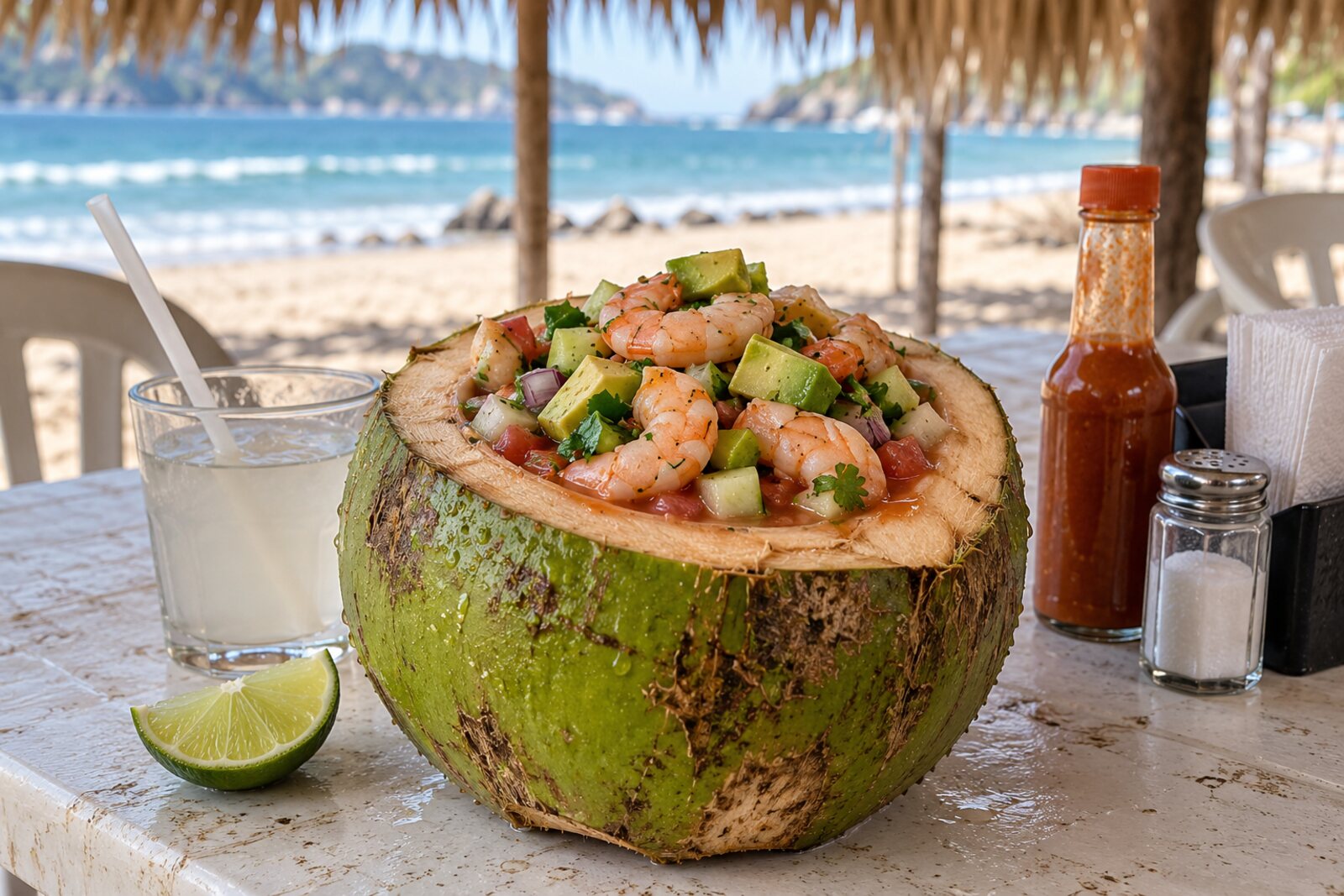
- Aguachile and shrimp ceviche. Raw shrimp cured in lime with serrano chile, cucumber and red onion. In Nayarit it comes with tostadas and, on the northern coast, with shrimp pulled from the estuary that morning.
- Boca de Camichín oysters. Estuary oysters farmed on rafts, shucked to order, with lime and salsa. Boca de Camichín (Santiago Ixcuintla) is Nayarit’s oyster capital.
- Lisa tatemada. Mullet slow-roasted over wood, typical of Santiago Ixcuintla and San Blas. Usually eaten with tortillas, beans and chile cora salsa.
- Frog legs (ancas de rana). Breaded or in garlic butter, the second most famous dish of Santa María del Oro after fish chicharrón.
- Tepache. A fermented drink of pineapple peel, piloncillo and cinnamon, common in Tepic’s markets and at patron-saint festivals.
- Banana bread (pan de plátano). A moist banana loaf, sometimes with walnuts or chocolate. San Blas turned it into a souvenir: you will find it at plaza stands and on the road to La Tovara.
- Cocadas and coconut sweets. Baked coconut candy, coconut in milk and “plátano pancle” (sun-dried banana) all along the coastal corridor from Tecuala to Compostela.
- Bolis and hand-churned ices (nieve de garrafa). The boli (fruit ice in a plastic sleeve) and hand-churned mango, soursop or nanche ices are the hot-weather dessert of every Nayarit town.
- Mango cajeta and chocolate tablets. Artisan sweets from Ahuacatlán and Amatlán de Cañas, made by families for generations. The best edible gift to take home from the south of the state.
Table: Nayarit dishes by region, where to try them and approximate 2026 prices
| Dish | Region | Where to try it (type of place) | Approx. price 2026 |
|---|---|---|---|
| Pescado zarandeado | Mexcaltitán, Boca de Camichín, San Blas, Riviera Nayarit | Beach palapas and estuary restaurants; sold by the kilo | $400–650 MXN/kg (20–35 USD) |
| Tlaxtihuil | Mexcaltitán, Santiago Ixcuintla | Village lunch counters and home cooks on request | $80–150 MXN (4–8 USD) |
| Shrimp tamales and meatballs | North: Santiago, Tuxpan, Tecuala | Markets and fondas; tamales at morning stands | $25–40 MXN per tamal; $120–180 MXN per plate |
| Pollo a la plaza | South: Ixtlán del Río, Ahuacatlán, Jala | Night stands on the main square | $120–180 MXN (6–10 USD) |
| Fish chicharrón and frog legs | Santa María del Oro | Restaurants on the lagoon shore | $180–300 MXN (10–16 USD) |
| Oysters | Boca de Camichín | Oyster shacks and enramadas on the estuary | $120–200 MXN per dozen |
| Sopes, gorditas and tostadas | Tepic and the center | Municipal markets and plaza stands | $35–70 MXN |
| Tejuino and tepache | Statewide | Street carts | $25–50 MXN |
| Banana bread, cocadas, bolis | San Blas and the coast | Plaza stands, regional candy shops | $20–120 MXN |
| Mango cajeta and chocolate tablets | Ahuacatlán, Amatlán de Cañas | Family candy shops and street markets | $60–150 MXN |
Prices are approximate 2026 references at simple establishments; in the Riviera Nayarit (Sayulita, Punta de Mita, Nuevo Vallarta) expect to pay 30 to 60 percent more. To choose where to sit down, check the site’s restaurant and hotel directory.
Typical food of Tepic, Nayarit
Tepic’s food is market food and plaza food. In the historic center, the Juan Escutia and Morelos markets are packed with fondas serving white and red pozole, blue-corn sopes and gorditas, stuffed quesadillas, chicken enchiladas and shrimp tostadas. In the afternoon people eat barbacoa tacos and “tacos de canasta”; at night, hot dogs and pork-leg tortas from stands that have held the same corner for decades.
Three things you only understand by eating in Tepic: the tejuino with lime sorbet sold from carts around the Plaza Principal, the sweet bread from Jalcocotán and Xalisco that arrives in the city every morning, and the coffee from the Sierra de San Juan, grown 40 minutes from the capital. If you are passing through, our Tepic in 1 day itinerary includes food stops, and the Tepic, capital of Nayarit page explains how to get there and what to see.
Where is pescado zarandeado from?
Pescado zarandeado is from Nayarit, and specifically from the island of Mexcaltitán in the municipality of Santiago Ixcuintla. The Totorame people and the inhabitants of the wetlands grilled butterflied fish in a zaranda woven from mangrove branches over embers of the same wood: the name comes from the basket. Over time the technique traveled down the estuary to Boca de Camichín and along the coast to San Blas and Banderas Bay, and from there to Sinaloa, which also claims it. Today the zaranda is metal and mangrove wood is protected, but the method (slow fire, whole fish, red marinade) is unchanged.
To try it at the source, a visit to Mexcaltitán, the possible birthplace of the Mexica, combines a boat ride through the estuary, the museum and a lunch of zarandeado and tlaxtihuil. Boca de Camichín is 40 minutes away and adds oysters to the menu.
What is “Nayarit style”? (mariscos estilo Nayarit)
If you see a sign for “mariscos estilo Nayarit” in Los Angeles, Chicago or Houston, it means seafood cooked the way it is done on the Nayarit coast, almost always by families from Santiago Ixcuintla, Tuxpan, Acaponeta or Tecuala. What defines the style: whole shell-on shrimp (a la cucaracha, a la diabla, al mojo de ajo), green or red aguachile, pescado zarandeado sold by the kilo, shrimp ceviche on tostadas and free botanas (shrimp broth, chile cora salsa) while you wait. “Camarones a la Nayarit” or “Nayarit style shrimp” on a U.S. menu is usually shrimp sautéed with chile de árbol, garlic and butter, very close to the “a la cucaracha” of Tepic. In Nayarit itself there is no such thing as “Nayarit style”: here it is simply called mariscos.
Where to eat traditional Nayarit food: markets, palapas and festivals
- Municipal markets (Tepic, Santiago Ixcuintla, Tuxpan, Compostela, Ixtlán): breakfasts and lunches for $70–150 MXN (4–8 USD) cooked by traditional cooks.
- Beach palapas and enramadas (San Blas, Platanitos, Guayabitos, El Novillero): pescado zarandeado, shrimp and oysters with an ocean view.
- Estuary restaurants (Mexcaltitán, Boca de Camichín, Tuxpan): tlaxtihuil, lisa tatemada and the day’s shrimp.
- Patron-saint festivals and fairs: the National Shrimp Fair in Santiago Ixcuintla (March), the San Blas festivities (February) and the Nayarit State Fair in Tepic (March) gather the most regional cooking in one place.
Frequently asked questions
What is Nayarit food?
Nayarit food is seafood and corn: pescado zarandeado, tlaxtihuil, shrimp tamales and meatballs, pollo a la plaza, shrimp pozole, fish chicharrón, blue-corn sopes, tostadas and tejuino. On the coast add oysters, aguachile and camarones a la cucaracha.
What is the most famous dish of Nayarit?
Pescado zarandeado: a butterflied fish rubbed with chile marinade and grilled in a wire basket over embers. It is sold by the kilo at palapas in San Blas, Mexcaltitán, Boca de Camichín and the Riviera Nayarit.
What are the typical Nayarit dishes?
The classic ten are pescado zarandeado, tlaxtihuil, shrimp tamales, shrimp meatballs, pollo a la plaza, Nayarit pozole, fish chicharrón, tostadas, blue-corn sopes and tejuino. This guide expands the list to 20 with drinks and desserts.
What is the typical food of Tepic, Nayarit?
Blue-corn sopes and gorditas, pozole, stuffed quesadillas, shrimp tostadas and tejuino with lime sorbet. The Juan Escutia and Morelos markets downtown are the best place to try it for $70–150 MXN.
Where is pescado zarandeado from?
From Nayarit: it was born on the island of Mexcaltitán (Santiago Ixcuintla), where fish was grilled in mangrove-wood baskets. From there it spread to Boca de Camichín, San Blas, the whole Nayarit coast and Sinaloa.
What is Nayarit style seafood?
It is the seafood cooking of the Nayarit coast carried abroad by migrants: whole shrimp a la cucaracha or a la diabla, aguachile, zarandeado by the kilo and shrimp ceviche tostadas. “Nayarit style shrimp” is usually shrimp with chile de árbol, garlic and butter.
Area map
- 1Mexcaltitán Island of shrimp sopes, shrimp tamales and taxtihuili.21.9057, -105.4752 · Open in Google Maps
- 2Boca de Camichín Oyster and pescado zarandeado shacks on the estuary.21.745, -105.4896 · Open in Google Maps
- 3San Blas Banana bread, seafood and beach-style zarandeado.21.5429, -105.2849 · Open in Google Maps
- 4Tepic (main square) Markets and dinner spots: tostadas, pozole, tejuino and bolis.21.5123, -104.8925 · Open in Google Maps
- 5Ixtlán del Río Southern-corridor food: birria, barbacoa and milk sweets.21.038, -104.3697 · Open in Google Maps
