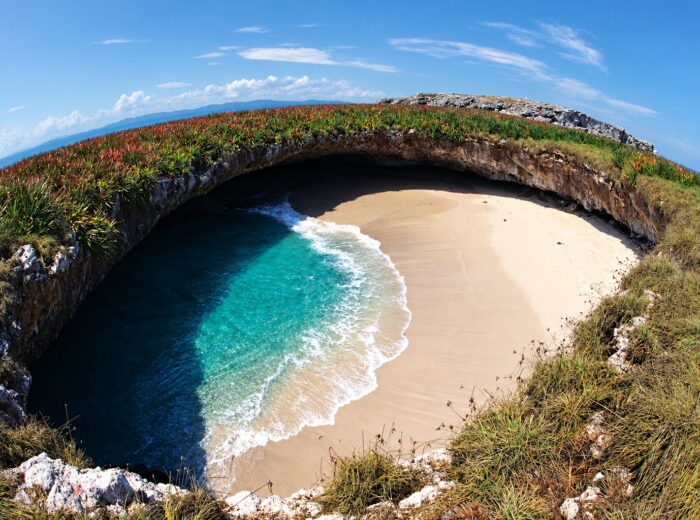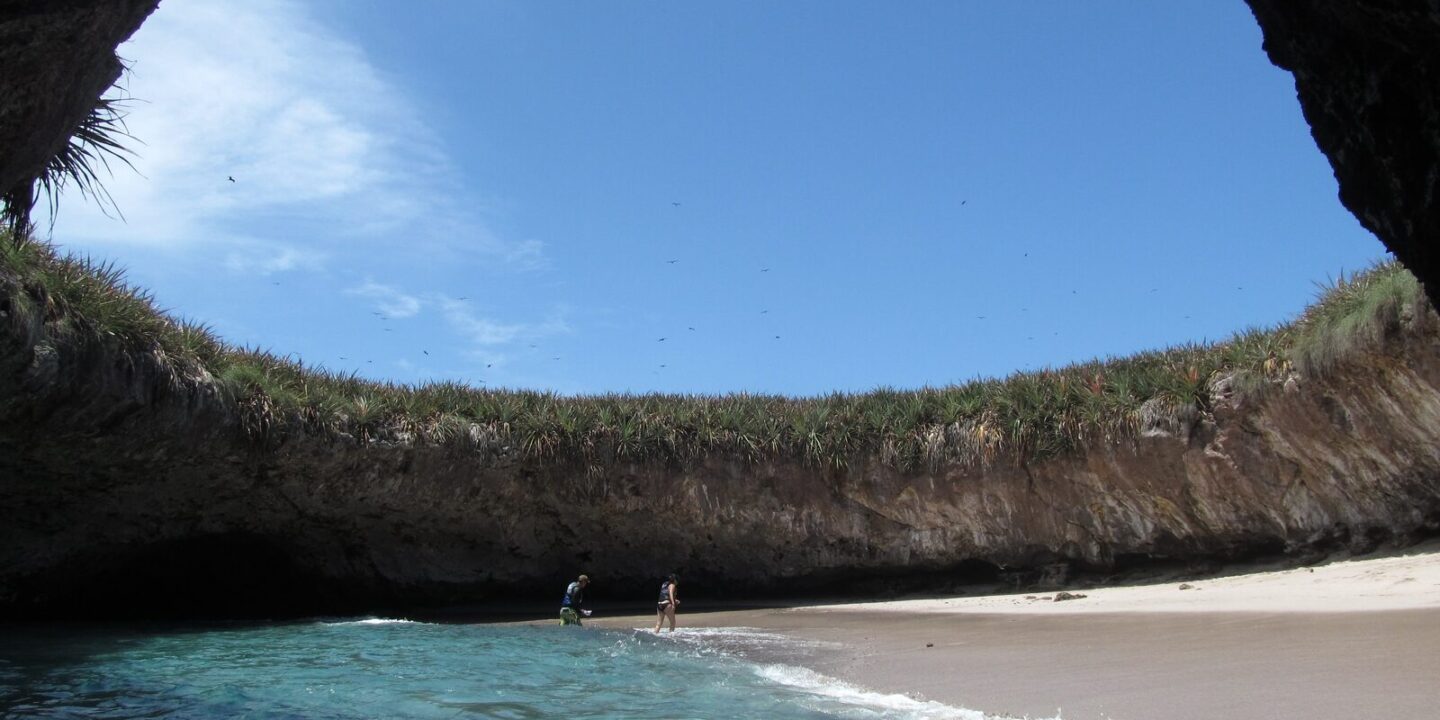
There is only one way to reach the Marietas Islands: by boat, with a tour operator licensed by CONANP, Mexico’s national parks agency. The closest departure point is Punta de Mita, at the northern tip of Banderas Bay, 15-25 minutes across the water; tours also leave from Sayulita, Nuevo Vallarta, Bucerías and Puerto Vallarta, with crossings of 45 to 90 minutes. If your goal is to set foot on Hidden Beach (Playa del Amor, the beach inside a collapsed crater), you need a tour with a specific permit, a daily cap of 116 visitors and, in 2026, the beach is closed on Mondays and Tuesdays.
The Marietas have been a National Park since 2005 and a UNESCO Biosphere Reserve (Man and the Biosphere program) since 2008. That is why the rules are strict: mandatory life vest, no fins, reef-safe sunscreen only, 30 minutes maximum on the beach and small groups. Done right, it is worth every peso: snorkeling with schools of fish and rays, blue-footed boobies nesting yards from the boat and, from December to March, humpback whales along the way.
Here is everything you need to plan the trip: which beach to pick, the current rules, where to depart from, approximate prices, the best season, what to pack and how to do it with kids.
What the Marietas Islands are and why they are protected
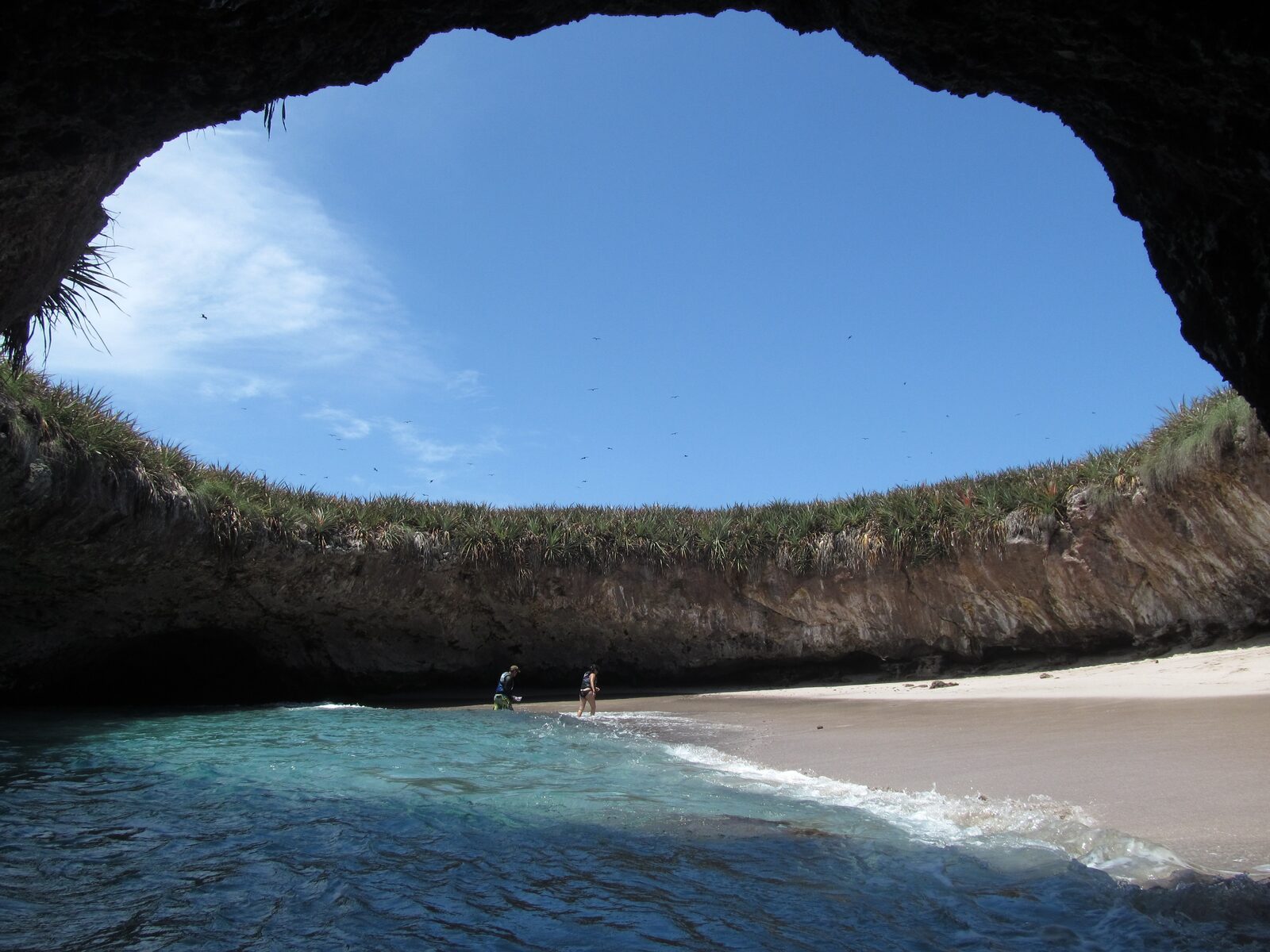
The archipelago consists of two main islands, Isla Larga and Isla Redonda, plus several volcanic islets about 8 km (5 miles) off Punta de Mita. They are uninhabited and for decades served as a military bombing range; the blasts are said to have helped shape the crater that now holds Hidden Beach. Jacques Cousteau and Mexican scientists campaigned for their protection, which came formally on April 25, 2005, with the National Park decree, and in 2008 with UNESCO recognition.
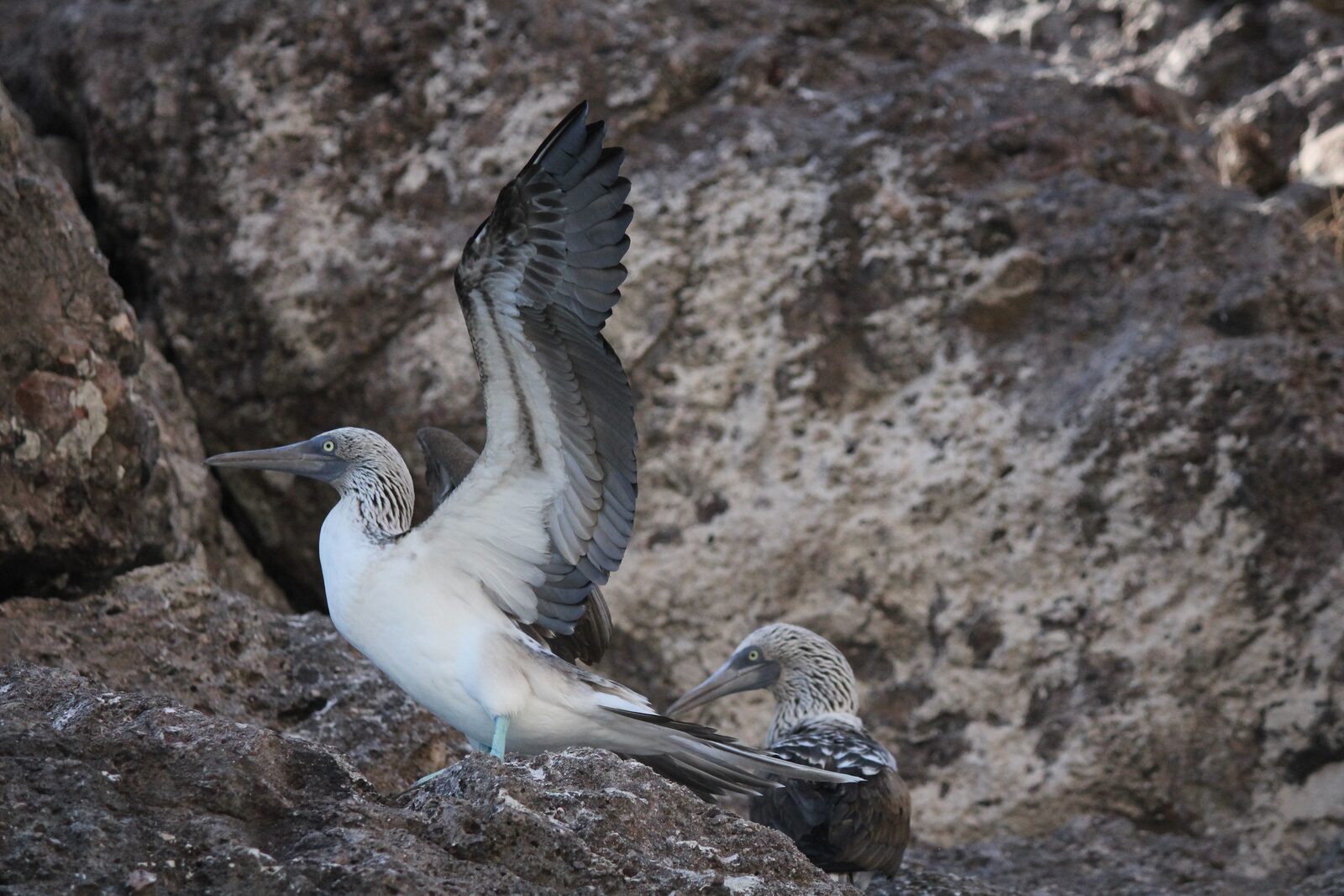
The park protects 1,383 hectares (3,417 acres), almost all of it ocean. More than 90 bird species nest here, including one of the most important blue-footed booby colonies on Mexico’s Pacific coast, and its reefs are a corridor for humpback whales, dolphins, olive ridley turtles and manta rays. In 2016, Hidden Beach was closed for four months because of coral damage, and since then CONANP has regulated access with quotas, time slots and rest days. Read more background in Islas Marietas, a hidden archipelago for love.
Hidden Beach (Playa del Amor) vs. Playa Nopalera
Hidden Beach
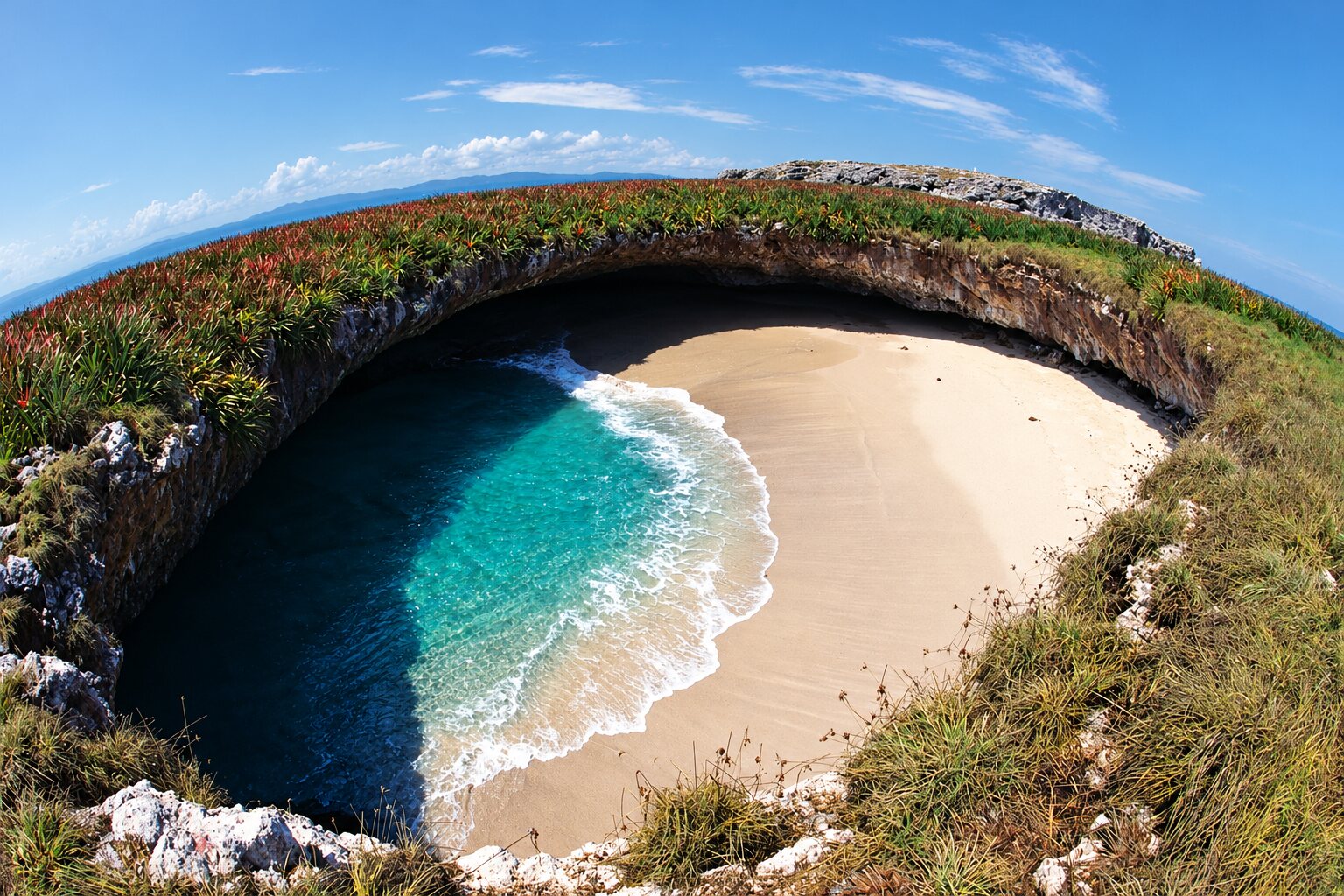
It sits on Isla Redonda inside an open-roofed crater, and the only way in is a 30-40 m (100-130 ft) swim through a natural tunnel with your guide, following a line of buoys at low tide. It is the photo everyone wants, but also the most restricted experience: daily cap, slots of about 15 people, half an hour inside and no access when the sea is rough. Operators quote a 90-95 % success rate in the dry season; it drops in summer.
Playa Nopalera
On Isla Larga, this is an open sandy beach reached directly from the boat (swimming or by kayak depending on the operator). The quota is far less strict, you can stay longer, it is the choice with small children and it has the park’s best accessible snorkeling, with rocky reef a few yards out. Many Hidden Beach tours also include Nopalera; “basic” tours go only to Nopalera and the snorkel spots.
Rules for visiting the Marietas Islands in 2026
These are the current CONANP rules enforced by licensed operators. Confirm with your operator when booking, since quotas and closure days can be adjusted by season:
- Daily cap at Hidden Beach: 116 people per day, in groups of no more than 15 with a certified guide.
- Time on the beach: 30 minutes maximum per group.
- Closure days: Hidden Beach is closed on Mondays and Tuesdays for monitoring and to let the ecosystem rest. The rest of the park (Nopalera, snorkeling, the arches) operates on those days.
- Life vest mandatory throughout the swim, no exceptions, even for strong swimmers.
- No fins in the tunnel or on the beach (they damage coral and stir up sand). Scuba diving is banned in the entire beach zone.
- Reef-safe (biodegradable) sunscreen only, applied at least 30 minutes before entering the water; better still, wear a long-sleeve UV rash guard.
- Prohibited: touching or feeding wildlife, taking shells or coral, smoking, alcohol on the beach, glass containers and drones without a permit.
- CONANP wristband: every visitor pays the protected-area entry fee, issued as a wristband. In 2026 it costs approx. 220 MXN (12 USD) per person, and some terminals add a port tax of approx. 35 MXN. It is usually paid in cash at boarding; ask whether your tour includes it.
- Age and health: most operators require a minimum age of 6-8 for the tunnel and do not take pregnant women or people with reduced mobility on that leg (Nopalera is fine).
Where tours depart from: comparison
The closer your departure point, the shorter the crossing and the lower the price. Approximate per-person ranges for shared tours in 2026; private boats for 6-8 people start at approx. 650 USD (12,000 MXN) from Punta de Mita.
| Departure | Crossing | Total length | Approx. price (shared) | Best for |
|---|---|---|---|---|
| Punta de Mita (El Anclote) | 15-25 min | 3-4 h | 65-100 USD / 1,200-1,900 MXN | Budget, seasickness, kids, anyone staying in Sayulita or Punta de Mita |
| Sayulita | 40-50 min | 4-5 h | 80-120 USD / 1,500-2,200 MXN | Beach launch from town; few boats, book ahead |
| Bucerías / La Cruz de Huanacaxtle | 50-70 min | 5-6 h | 90-150 USD / 1,700-2,800 MXN | Good middle ground; comfortable marina at La Cruz |
| Nuevo Vallarta (marina) | 60-80 min | 6-7 h | 100-190 USD / 1,900-3,500 MXN | Catamaran with lunch, open bar and music; all-inclusive resorts |
| Puerto Vallarta (maritime terminal) | 75-90 min | 7-8 h | 100-190 USD / 1,900-3,500 MXN | Anyone staying in Vallarta; full day with wildlife spotting en route |
Watch the fine print: many Puerto Vallarta and Nuevo Vallarta tours go to “the Marietas Islands” without including Hidden Beach. If you want it, look explicitly for “Hidden Beach access” or “Playa Escondida permit”; it adds roughly 20-45 USD (400-800 MXN) and depends on the operator having quota that day. To get your bearings, see our Bahía de Banderas page and how to get to Nayarit.
Best season to visit the Marietas Islands
- November to May (dry season): calmer seas, better snorkeling visibility (10-15 m / 33-50 ft on good days) and the highest odds of getting into Hidden Beach. It is also high season, so book ahead.
- December to March: all of the above plus humpback whales. Boats may not approach within 1.5 km of the archipelago to watch them, but sightings on the crossing from Punta de Mita are common. See our humpback whale watching guide.
- April and May: water already warm (79-81 °F / 26-27 °C), few swell cancellations and fewer people after Holy Week. Blue-footed boobies are in full nesting mode.
- June to October: water at 82-86 °F (28-30 °C) and lower prices, but bigger swells, afternoon storms and more Hidden Beach cancellations. Take the first morning departure, when the sea is flattest.
Snorkeling, birds and what to expect on the trip
A typical tour from Punta de Mita includes a loop past the arches and caves of Isla Larga, one or two snorkel stops (gear included), time at Playa Nopalera and, if booked, your slot at Hidden Beach. In the water you will see angelfish, surgeonfish, blue and yellow damselfish, pufferfish, moray eels and, with luck, rays and turtles. The bottom is a mix of volcanic rock and coral, so never stand on it. For more snorkel spots in the region, read swim among fish and coral reefs in Riviera Nayarit.
The birds are the show almost nobody expects. Besides the blue-footed booby there are brown boobies, frigatebirds, pelicans, gulls and terns. Guides cut the engine below the nesting cliffs; bring binoculars and skip the flash.
What to bring
- Swimsuit on, towel and dry clothes for the ride back.
- Reef-safe sunscreen (guides check) and a long-sleeve UV rash guard.
- Water shoes: Nopalera is rocky and so is the tunnel.
- Small dry bag for phone and cash; a waterproof phone pouch if you want photos on the beach.
- Cash in pesos for the wristband, port tax and tip (10-15 % is customary).
- Motion-sickness tablet taken 30-60 minutes before departure if you leave from Vallarta or Nuevo Vallarta.
Booking tips and visiting with kids
Book ahead
- For Hidden Beach between December and April, book 4-8 weeks in advance; the 116-person quota sells out, especially on Wednesdays and Sundays.
- For snorkel-and-Nopalera-only tours, 1-2 weeks is enough, and in low season sometimes the day before.
- Choose Wednesday through Sunday; remember Hidden Beach does not open on Mondays or Tuesdays.
- Ask about the swell cancellation policy: reputable operators reschedule or refund if CONANP closes access that day.
- Check that the operator is registered with CONANP and that the price includes (or clearly lists separately) the wristband, snorkel gear and life vest.
With kids
Nopalera and snorkeling from the boat work well from age 4-5 with a vest. For the tunnel into Hidden Beach, most operators set a minimum of 6-8 years and expect the child to be comfortable swimming in open water with light swell; the stretch is short but has current. Choose a Punta de Mita departure (less boat time, less seasickness) and the earliest slot. If you are staying in Sayulita, pair the tour with a quiet day in town; see what to do in Sayulita.
Frequently asked questions
How do you get to the Marietas Islands?
Only by boat with a licensed operator. The closest departure is Punta de Mita (15-25 minutes across); tours also leave from Sayulita, Bucerías, Nuevo Vallarta and Puerto Vallarta, with 45 to 90 minutes on the water.
How much does a Marietas Islands tour cost in 2026?
From approx. 65 USD (1,200 MXN) per person on a shared tour from Punta de Mita, and 100-190 USD (1,900-3,500 MXN) on a catamaran from Nuevo Vallarta or Puerto Vallarta. The CONANP wristband (approx. 220 MXN) is usually paid separately.
Which days is Hidden Beach closed?
Mondays and Tuesdays, for monitoring and to let the ecosystem rest. The rest of the park, including Playa Nopalera and the snorkel sites, can be visited on those days.
How many people can enter Hidden Beach per day?
116 people per day, in guided groups of up to 15, for 30 minutes each, always wearing a life vest and without fins.
When is the best time to visit the Marietas Islands?
November to May, when the sea is calmest and visibility is best. From December to March you also get humpback whales on the crossing.
Can you visit the Marietas Islands with children?
Yes. Playa Nopalera and snorkeling from the boat suit kids from age 4-5 with a vest; for the tunnel into Hidden Beach most operators require a minimum age of 6-8.
Area map
- 1Hidden Beach (Isla Redonda, Islas Marietas) National park; authorized tours only.20.7013, -105.5682 · Open in Google Maps
- 2Punta de Mita (El Anclote) Closest departure point for the Marietas Islands.20.77287, -105.51793 · Open in Google Maps
- 3Marina Riviera Nayarit La Cruz de Huanacaxtle marina; tours and fishing trips leave here.20.74877, -105.37914 · Open in Google Maps
- 4Paradise Village Marina Nuevo Vallarta marina; departure point for tours and fishing.20.6914, -105.29345 · Open in Google Maps