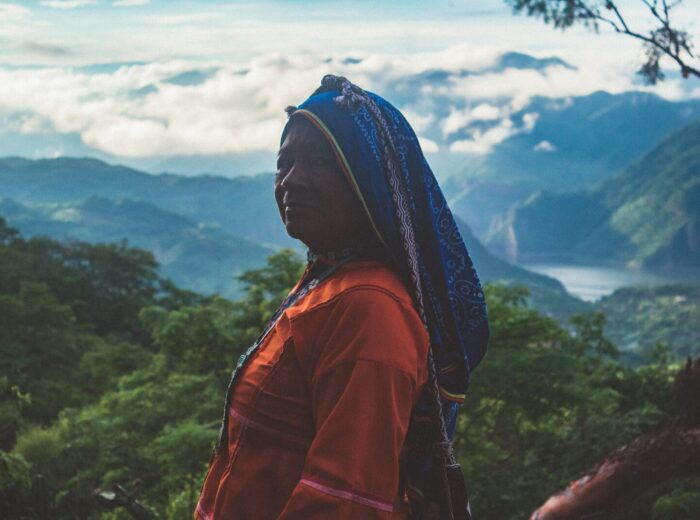
Cora Holy Week, which the Náayeri (Cora) people themselves call la Judea, is the most important ceremony of the year in Jesús María, the seat of the Del Nayar municipality, and in other Cora communities in the Sierra Madre. For several days hundreds of men paint their bodies and take part as “judíos” (Jews) or “borrados” (the erased ones) in a ritual that weaves the Christian Passion story into the Cora view of the world. In 2027 the central days fall on Thursday, March 25 and Friday, March 26.
This guide is for travelers who want to attend: what the Judea means, what happens each day, the rules you must respect (above all: no photography), how to plan the trip and where to sleep. For general facts about the municipality (population, climate, communities and the full distance table), see our Del Nayar guide; for the history of the Cora people before you go, read King Nayar and the Indigenous peoples of the Gran Nayar.
What Cora Holy Week (the Judea) is
The Cora call themselves Náayeri, the word that gave Nayarit its name. They were among the last peoples in Mexico to be subdued by the Spanish Crown: the Mesa del Nayar held out until 1722, two centuries after the fall of Tenochtitlan. When missionaries arrived, the Catholic calendar was absorbed into a religion that already had its own festivals tied to corn, rain and the sun. The result is not a Holy Week “with Indigenous touches” but a ceremony of its own, organized by the traditional authorities and lived by the entire community.
The Judea has national recognition: in 2004 it received Mexico’s National Prize for Arts and Sciences in the field of Popular Arts and Traditions. To those who celebrate it, though, it is not heritage to put on display but a ritual obligation fulfilled every year.
The judíos, or borrados
At the heart of the ritual are the judíos, also called borrados: men from the community, many of them young, who paint their bodies black and white and sometimes wear masks. They represent the forces that pursue and kill Christ, and for those days the town is symbolically in their hands: they run through the streets, dance, play pranks and turn the world upside down. At the end, on Holy Saturday, they wash the paint off in the river, closing the cycle and restoring order.
Cora Holy Week 2027: dates and what happens each day
The main ceremonies run from Holy Wednesday to Holy Saturday, although preparations start earlier and each community follows its own order. Use this table to plan; exact times are set by the traditional authorities and are not published.
| Day (2027) | Date | What to expect |
|---|---|---|
| Palm Sunday | March 21 | Holy Week begins; a good day to reach the region and sort out lodging. |
| Holy Wednesday | March 24 | The main ceremonies begin in Jesús María. |
| Holy Thursday | March 25 | Central day: the judíos take over the streets and pursue the image of Christ; processions and dances. |
| Good Friday | March 26 | Central day: the death of Christ; the most intense ritual activity and the most visitors. |
| Holy Saturday | March 27 | Closing: the judíos wash off their paint in the river and order is restored. |
| Easter Sunday | March 28 | Travel day; leave early so you are not on the mountain road after dark. |
Planning further ahead? In 2028, Holy Thursday and Good Friday fall on April 13 and 14.
Rules of respect: what not to do
You can attend, but only as a guest. The traditional authorities decide who may be present, where and when, and their instructions override anything a guidebook says.
- No photos or video. During the Judea, cameras, phones and drones are usually forbidden, and you may be asked to hand over or put away your equipment. Follow the rule even if you see others breaking it. Outside the festival, always ask before photographing anyone.
- Don’t enter ceremonial spaces unless invited, and don’t get in among the judíos while they run or dance.
- It’s not a show: don’t applaud, ask for anything to be repeated or treat participants as performers.
- No alcohol or drugs of your own, and never bring them into the community.
- Dress simply and don’t dress up or paint yourself “like the judíos”: for the community the paint is not a costume but part of the ritual.
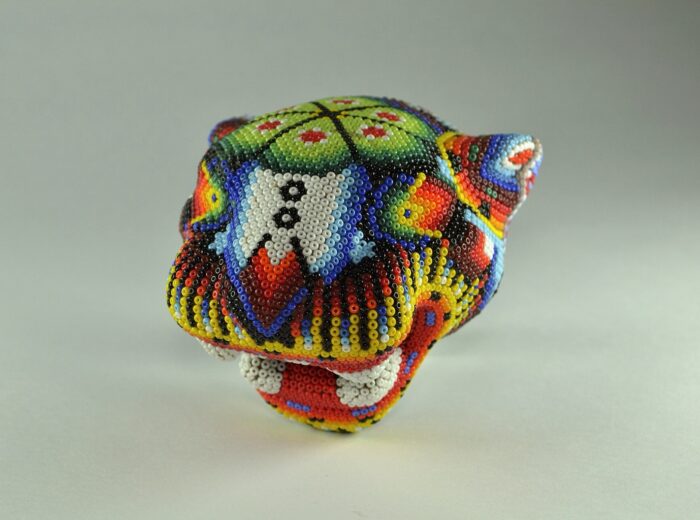
- Buy crafts directly from the people who make them and pay a fair price; to understand the Wixárika (Huichol) art you’ll see in the region, read the origin and meaning of the ojo de dios.
If you are asked to leave at any point, do so without argument. Going with someone from the community or a local guide who knows the protocols makes a big difference.
How to get to Jesús María
The gateway to the sierra is Ruiz: from Tepic it’s about 63 km (39 miles) on the 15D toll road (1 hour), then about 124 km of mountain road to Jesús María (around 3 hours), passing the Mesa del Nayar. In total, roughly 181 km and 4 hours from Tepic; from Guadalajara, 6.5 to 7 hours. The full leg-by-leg table is in our Del Nayar guide.
What changes during Holy Week is the traffic and the logistics:
- Leave Tepic very early and drive in daylight only: the road has hairpin bends, steep grades and patchy cell coverage.
- Fill the tank in Ruiz; there are almost no gas stations in the sierra.
- A high-clearance vehicle helps, although a regular car can make it with care.
- If you’d rather not drive, ask in Tepic or Ruiz about hiring a local driver, and arrange your return in advance.
Flying in? The closest airport is Tepic’s; see all options in how to get to Nayarit.
Where to stay
Lodging in Jesús María is very limited and fills up during Holy Week. You have three options:
- In Jesús María: simple rooms and family homes that rent out a room. Secure them weeks ahead, usually through direct contact.
- In the Mesa del Nayar (25 km, about 45 minutes away): an alternative if Jesús María is full; ask well ahead whether rooms are available. It’s cooler up there.
- In Ruiz or Tepic: more choice, but 3–4 hours of driving each way. Only workable if you visit for one day and return in daylight.
Bring your own insect repellent, flashlight, basic first-aid kit and plenty of cash: don’t count on ATMs or card payments.
What to pack and wear
In late March, Jesús María, on the valley floor at about 426 m (1,400 ft), is hot: expect highs above 30 °C (86 °F) and mild nights. It’s the dry season, so rain is unlikely. More detail in our Nayarit weather month by month.
- Light, modest clothing, a hat and comfortable closed shoes.
- Water, sunscreen and snacks for the road.
- Cash in small bills.
- A phone you have no intention of using as a camera: keep it put away during the ceremonies.
Cora Holy Week or a beach Holy Week?
The Judea has nothing to do with a beach vacation: it’s a long trip, with discomforts and strict rules, for travelers who want to understand one of Mexico’s strongest living traditions. If you’re after rest and sun instead, see our guide to Holy Week vacations in Nayarit, with beaches, prices and tips for those dates.
Frequently asked questions
When is Cora Holy Week in 2027?
The ceremonies run from Holy Wednesday (March 24) to Holy Saturday (March 27). The central days are Thursday, March 25 and Friday, March 26, 2027.
Where is Cora Holy Week celebrated?
The best known is in Jesús María, seat of the Del Nayar municipality, but it is also held in the Mesa del Nayar and other Cora communities in the sierra.
Can I take photos during Cora Holy Week?
In most cases, no. During the Judea, photography, filming and drones are usually forbidden, and the traditional authorities may ask you to hand over or put away your equipment.
Who are the judíos or borrados?
They are men from the community who paint their bodies black and white and, in the ritual, pursue Christ and turn the town upside down. On Holy Saturday they wash in the river and order is restored.
How long is the drive from Tepic to Jesús María?
About 4 hours for 181 km: one hour on the 15D toll road to Ruiz and roughly 3 hours of mountain road. Drive in daylight only.
Where should I stay for Cora Holy Week?
Jesús María has few rooms and they fill up, so book weeks ahead. Alternatives are the Mesa del Nayar, 45 minutes away, or Ruiz and Tepic, 3–4 hours away.
Area map
- 1Jesús María (Del Nayar) Main setting of the Judea; 426 m above sea level.22.2513, -104.518 · Open in Google Maps
- 2Mesa del Nayar Cora community 25 km from Jesús María; 1,383 m.22.2148, -104.6507 · Open in Google Maps
- 3Ruiz Gateway to the sierra; fill the tank here. 63 km from Tepic.21.9505, -105.1461 · Open in Google Maps